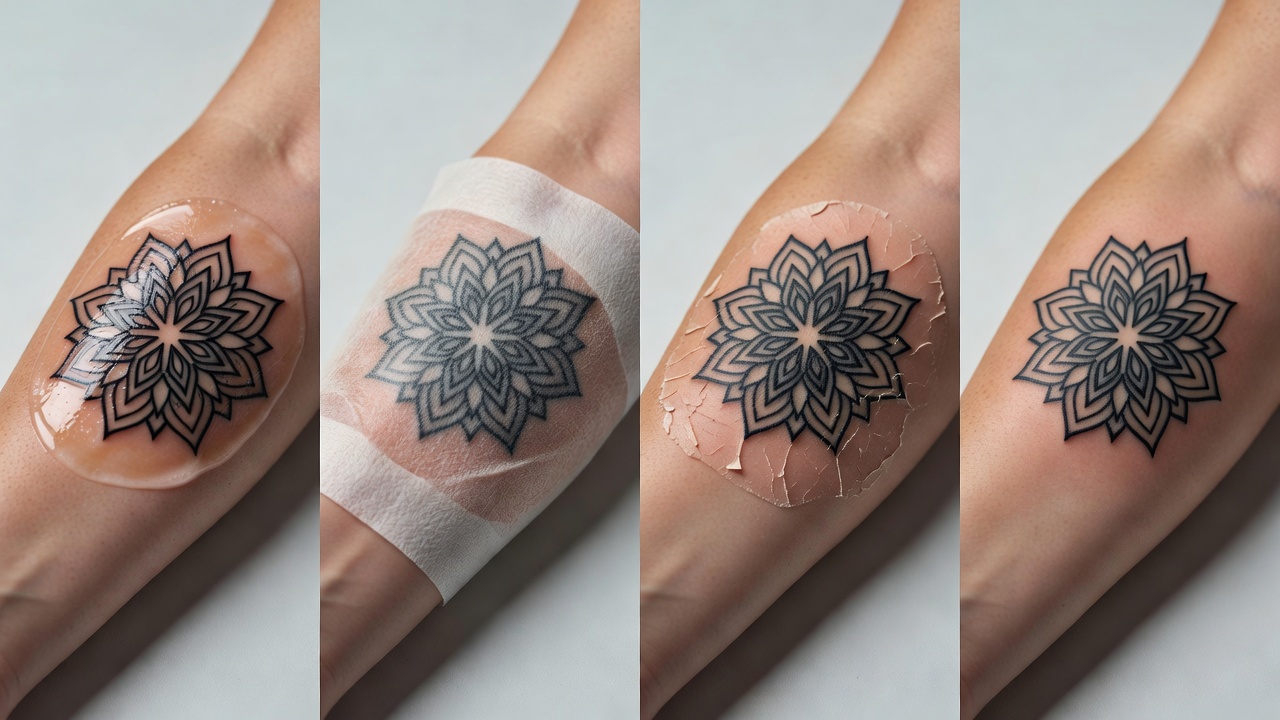
A tattoo is biologically classified as an open puncture wound infused with insoluble pigment particles. When needles penetrate the epidermis and deposit ink 1.5mm to 2mm deep into the dermis, the immune system launches an immediate inflammatory response.
The Role of Macrophages
White blood cells called macrophages rush to the site to engulf the foreign ink particles. However, because tattoo pigments (often metallic oxides or organic compounds) are too large for macrophages to break down, the immune cells die with the ink trapped inside them. As new dermal cells replace them, the pigment remains locked in place for decades.
Second-Skin Bandages vs Classical Cling Film
Historically, artists wrapped tattoos in non-porous plastic wrap for a few hours before recommending dry antibacterial soap. Today, polyurethane medical wraps (e.g., Saniderm, Dermalize) allow oxygen exchange while retaining body fluids containing essential plasma proteins. This moist environment reduces scab formation and speeds up epidermal regeneration by up to 40%.
Long-Term UV Protection
Ultraviolet radiation breaks down pigment chemical bonds, allowing macrophages to transport small ink fragments into the lymphatic system. Daily application of SPF 50+ broad-spectrum sunscreen is the single most effective action you can take to prevent black line spread and color degradation over time.