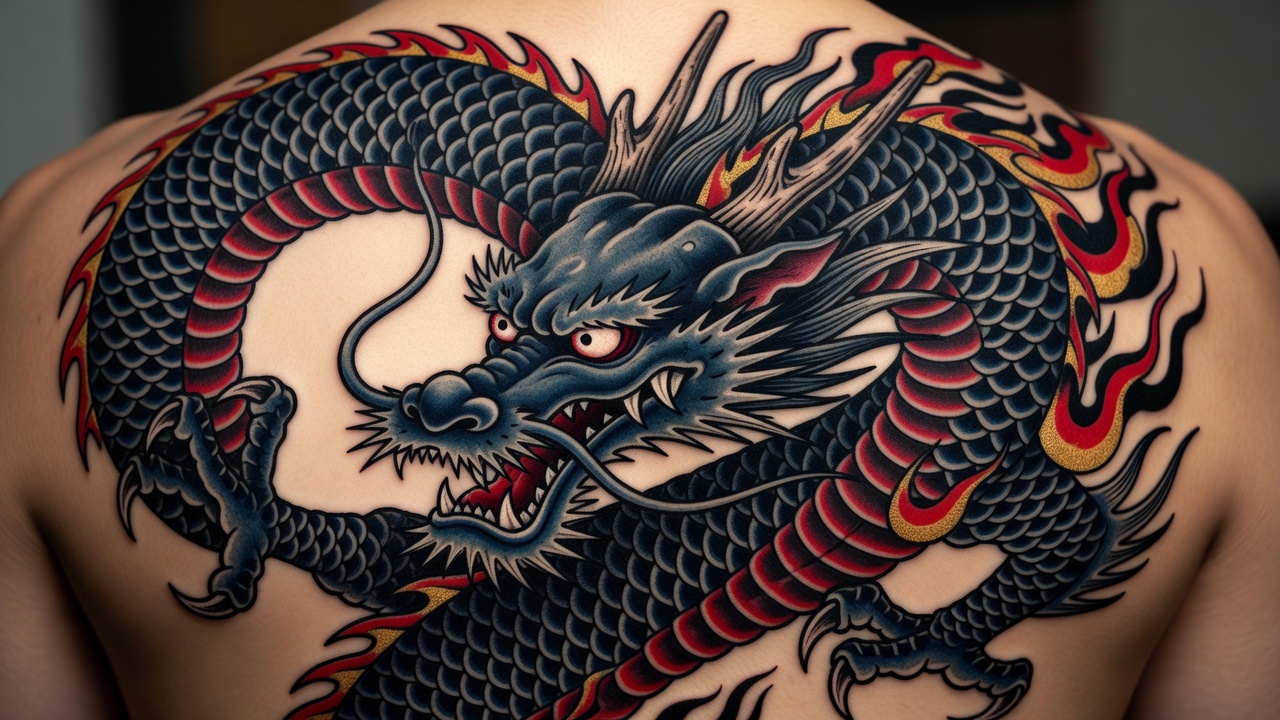
In Japan, traditional body tattooing is known as Irezumi or Horimono. Far from modern trends, Irezumi is an all-encompassing bodily canvas, often taking years of weekly sessions to construct a cohesive full-body suit (Munewari or Shujin).
The Art of Tebori: Hand-Poked Precision
While modern electric tattoo machines dominate global studios, traditional Japanese masters utilize Tebori—a manual hand-poke technique using wooden or metal shafts fitted with fine needle bundles. The artist rhythmically pushes ink into the dermis with a distinct sound known as shaku-shaku. Tebori shading yields rich color gradients and deep black saturation unmatched by high-speed coils.
Mythological Motifs & Seasonal Rules
Irezumi is governed by strict rules of iconography. Water elements must be paired with aquatic creatures like Koi or Dragons, while wind and clouds frame Tigers and Samurai heroes from the classical Suikoden tale. Mixing spring cherry blossoms with autumn maple leaves on the same sleeve is traditionally considered a faux pas by master Horishis.
With Japan’s Supreme Court upholding in 2020 that tattooing is an artistic craft rather than a medical procedure, a new generation of youth in Tokyo, Osaka, and Kyoto is reclaiming Irezumi as a proud monument to craftsmanship.